

I've always had a soft spot for mid-century design, particularly Australian homes built during the 1950s, 60s & 70s. There's something about their interesting rooflines, generous windows, warm timber & connection to the garden that I find incredibly appealing.
They weren't necessarily large homes, and some of the kitchens and bathrooms would feel tiny by today's standards, but there was often a cleverness to the way space was used that I still appreciate.
We're currently working on two original 1950s homes, which has given me plenty of opportunity to think about what makes these houses so interesting, and how we can bring them into the present without losing the character that made us fall in love with them in the first place.
It's an interesting balance, particularly when the people living in these homes have very different expectations of their kitchens, bathrooms, storage and everyday comfort than the families who first moved into them.
There's a lot we can learn from an era when good design wasn't necessarily about having more space, but making better use of what was available.
One of the things I particularly appreciate about Australian modernist homes is their relationship with the outdoors. Even relatively modest houses could have a lovely connection to the garden, with windows positioned to capture the light, living areas opening onto terraces and the landscape becoming part of the experience of being inside.
It's something we continue to consider carefully in our work today. Where does the morning sun enter? What can you see from the dining table? Is there a lovely outlook that's being missed because of the way a room is arranged? Sometimes it's the decisions about windows, furniture placement or the connection between rooms that make the greatest difference to how a home feels.
Working with an original mid-century home also means knowing what deserves to stay.
There might be beautiful timber panelling, an original fireplace, interesting brickwork or joinery that's been there for seventy years. Some of those details are worth preserving, others might need to be restored or adapted, and occasionally something simply doesn't work for the way the owners want to live.
I don't think every original feature needs to be kept purely because it's old, but I do think these homes deserve a considered approach. It's very easy to renovate away the character that made a house appealing in the first place.
The challenge is finding the right balance between respecting the original architecture and making the home genuinely comfortable and functional for its owners today.
That might involve rethinking a kitchen that was designed for a very different way of living, improving storage or making better use of the connection between indoor and outdoor spaces. The changes need to feel appropriate to the house, rather than as though an entirely different style has been introduced halfway through.
This is where the furniture becomes particularly interesting.
We're currently bringing together vintage and contemporary pieces in our projects, and I love the character that comes from combining the two. An original mid-century chair can sit beautifully alongside a contemporary sofa, while a vintage sideboard might be just the thing that gives a newly renovated room some personality.
It's not about filling a home with furniture from one particular decade. We're considering the proportions, the materials, the relationship between pieces and how they'll be used. A home should feel as though it belongs to the people living there, with room for their own collections, artwork and furniture they've gathered over the years.
Of course, you don't need to own an original mid-century house to appreciate the style.
There are plenty of opportunities to bring its influence into a contemporary home, whether through the architectural detailing, the warmth of timber, the furniture or the way the interiors connect with the outdoors. I particularly like the simplicity of the joinery and the way natural materials can give a room character without needing an enormous amount of decoration.
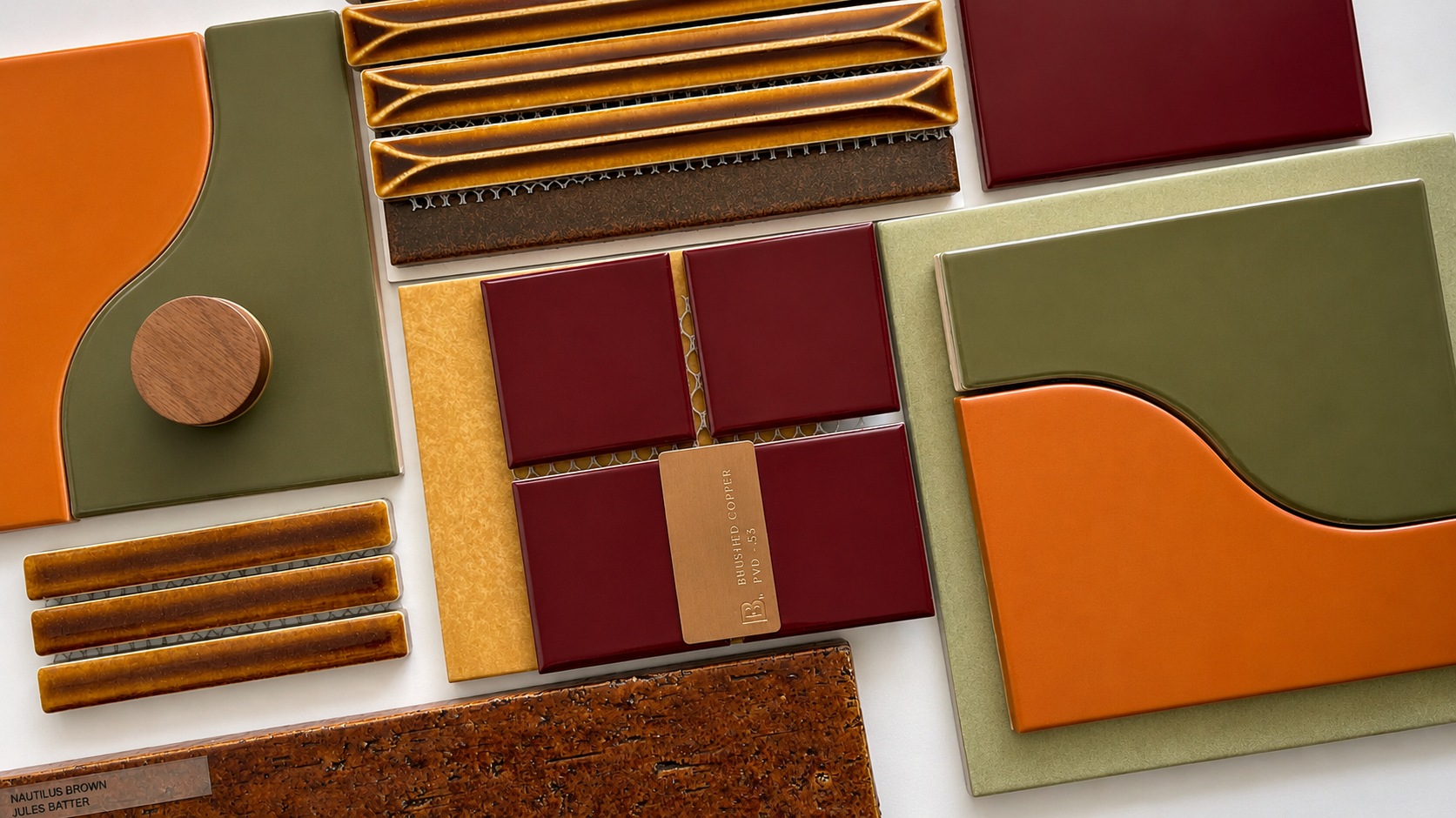
Colour is another part of the period that I enjoy. We tend to associate mid-century interiors with ochre, burnt orange and olive green, but the palette was much broader than that. Beautiful warm neutrals, soft blues, earthy reds and greens can all work alongside timber, stone & natural fabrics, depending on the character of the home and the people living there.
I love the feeling of these homes. There's a warmth and informality to them, particularly when the original architecture has been respected and the interiors have been allowed to evolve. They're the sort of spaces where you can imagine a long lunch with friends, an afternoon reading beside an open window or simply enjoying the garden from inside.
It's that feeling I'd want to preserve in an original mid-century home, and bring to a contemporary home influenced by the period. The architecture may be different, but the pleasure of living in a home that's comfortable, welcoming & beautifully designed is just as relevant today.
At Mel Hoekstra Interiors, we appreciate the character and history of original homes while understanding the needs of contemporary living. Through careful planning, beautiful materials and a considered mix of old & new, we create interiors that respect the architecture and feel personal to the people who call them home. It's all part of Our Way of Living.
