

British Colonial Interiors: A Home Collected Over Time
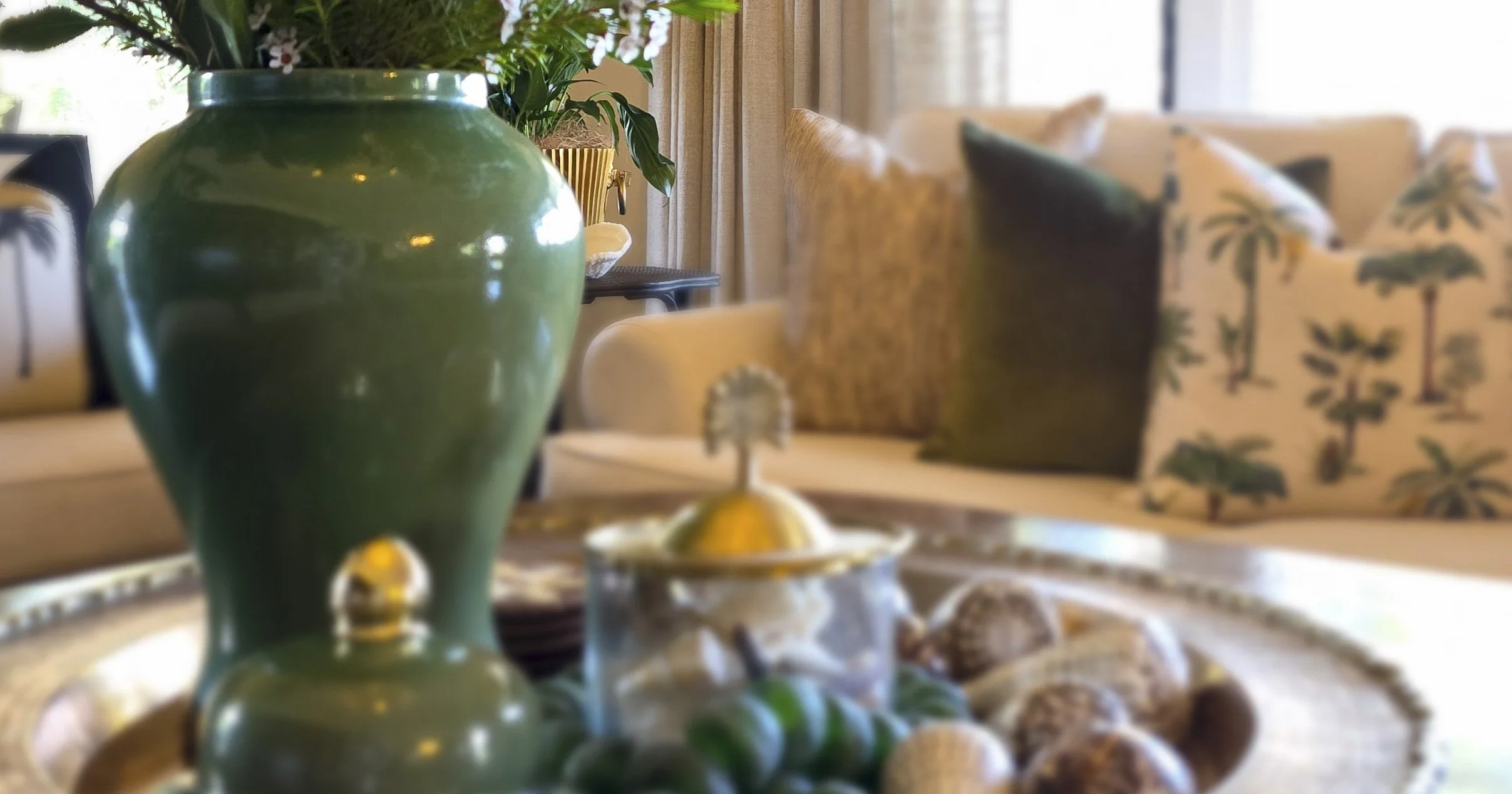
There is something about a British Colonial interior that makes you want to settle in.
Perhaps it's the depth of the timber against crisp white walls, the worn leather, linen, rattan & greenery, or the sense that not everything in the room arrived at the same time. You notice a carved timber box on a console, an old map on the wall, books collected over years and something brought home from a trip whose story inevitably comes out when someone asks about it.
That, for me, is where this style becomes really interesting.
When I first wrote about British Colonial interiors, I looked at the elements we tend to associate with the style; rich timber, natural materials, neutral tones, tropical influences, greenery, artwork & collections gathered from different places. Those ingredients still matter, but the more we work with this style, the more I'm drawn to what happens when they're allowed to become personal rather than simply decorative.
Read our original journal: British Colonial Interiors
A British Colonial home shouldn't look as though someone went shopping for a British Colonial home.
It should feel collected.
That distinction matters, because the style grew from a meeting of different places, materials and influences, and there's an informality to that mix that disappears when everything is too coordinated. Dark timber might sit alongside woven cane, aged brass, block-printed fabric, a piece of Chinese porcelain, an African basket or artwork found somewhere completely unexpected. Not everything needs to share a provenance or belong to the same period; in fact, the room becomes far more interesting when it doesn't.
Travel gives us some of the best opportunities to build those layers.
I've always loved bringing something home from a trip, particularly when it isn't the obvious souvenir. A small ceramic, an old book, a piece of art, a basket or something handmade can hold an extraordinary amount of memory. Years later, you don't simply see the object sitting on a shelf; you remember where you found it, who you were with, the little shop you wandered into or the conversation you had with the person who made it.
Put enough of those things into a home over time and you begin to create something that can't simply be replicated.
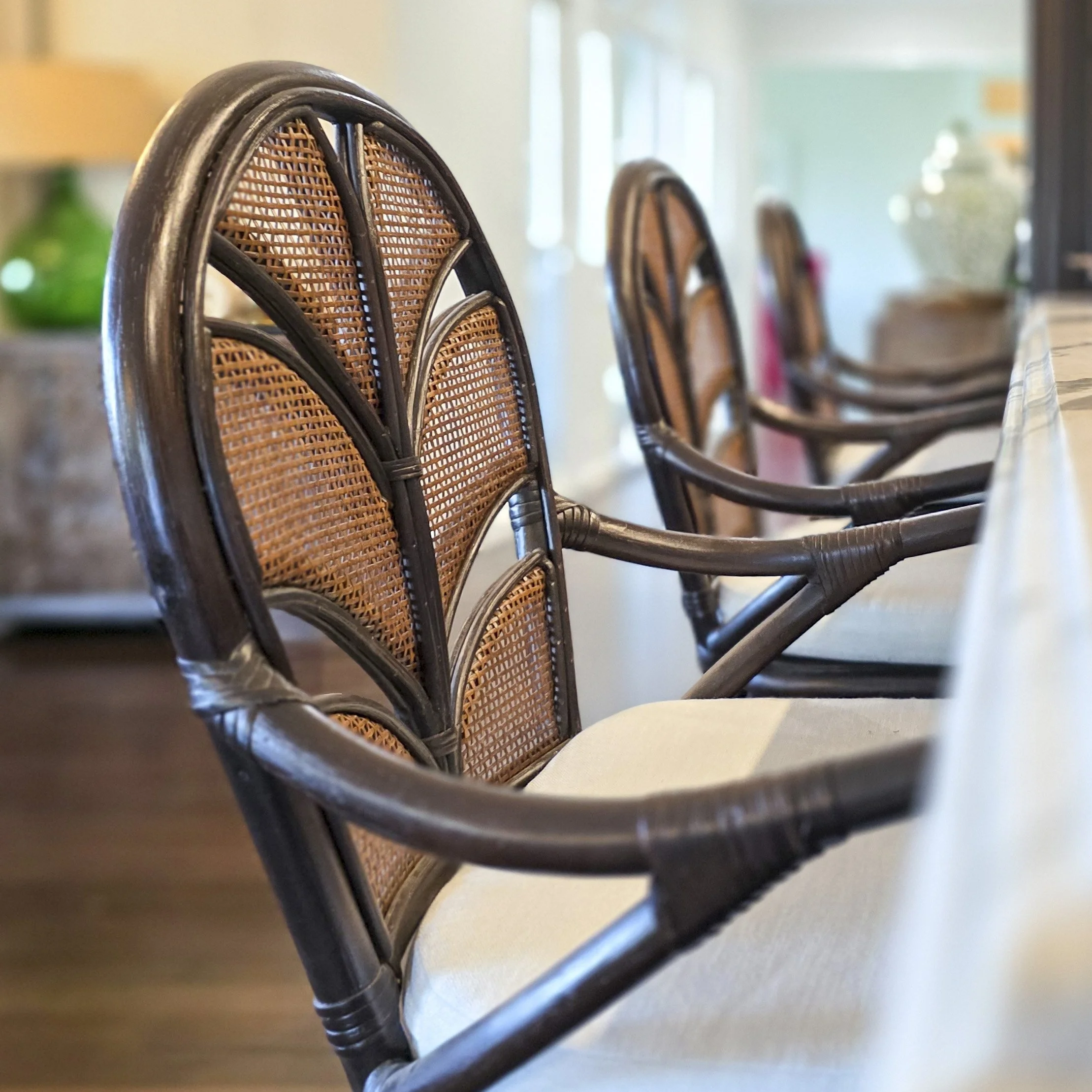
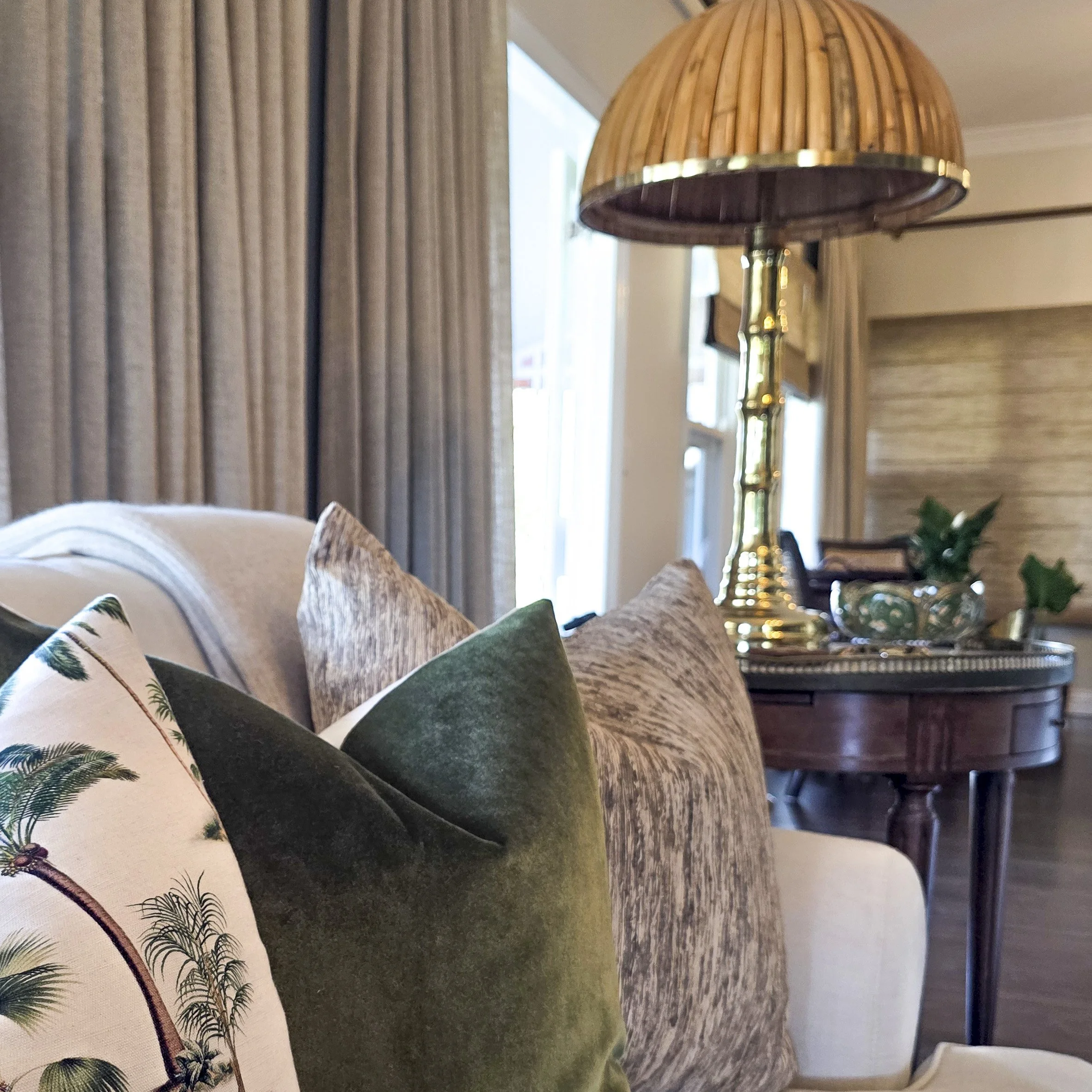
This is also why British Colonial style shouldn’t feel overly polished. There needs to be some age, patina and contrast. A beautiful antique chest can sit beside a contemporary sofa. A slightly worn leather chair becomes better with use. A collection of books doesn't need to be arranged by colour, and objects gathered while travelling don't need to match the room before they're allowed into it.
They belong because they mean something.
Of course, there is a fine line between collected and cluttered, and this is where restraint becomes important. A home filled with travel finds can very quickly lose the very feeling we're trying to create if every surface becomes a display. Collections need space around them, and sometimes one wonderful object sitting alone has far more presence than ten competing for attention.
The backdrop matters too. British Colonial interiors tend to work beautifully when the larger elements of the room are confident but restrained: rich timber, natural stone, linen, woven fibres, aged metals and a palette drawn from the landscape. Those materials create enough depth that the more personal pieces can come and go without the home losing its identity.
And then there is the greenery.
Large palms, branches and generous foliage have always been part of the visual language of British Colonial interiors, but their appeal goes beyond the obvious tropical reference. Greenery loosens everything up. It softens dark timber, interrupts a run of joinery, brings movement into a room and stops a beautifully furnished space from feeling too controlled.
All of these layers contribute to something that's difficult to capture in a list of design elements; the atmosphere.
A good British Colonial interior feels generous. Chairs invite you to sit rather than admire them from a distance, tables are made for books, drinks & conversation, and there is usually something nearby that makes you want to ask, “Where did you find that?”
I think that's one of the reasons I'm so drawn to the style. At its best, it isn't really about recreating a particular period at all. It's about creating a home with depth, warmth and a sense of curiosity; a home that can hold beautiful things without becoming precious about them, and where new pieces can be added as life, travel & interests continue to change.
The most interesting version will never be the one where every element is recognisably British Colonial.
It will be the one where the style provides the foundation, but the people who live there provide the story.
“A home collected over time will always have something a perfectly coordinated room cannot: a conversation waiting in almost every corner.”
At Mel Hoekstra Interiors, we create homes that are layered with meaning rather than designed around a single look. Through materials, furniture, art & pieces collected over time, we create interiors that feel warm, personal and connected to the people who live there. That is the foundation of Our Way of Living.
