

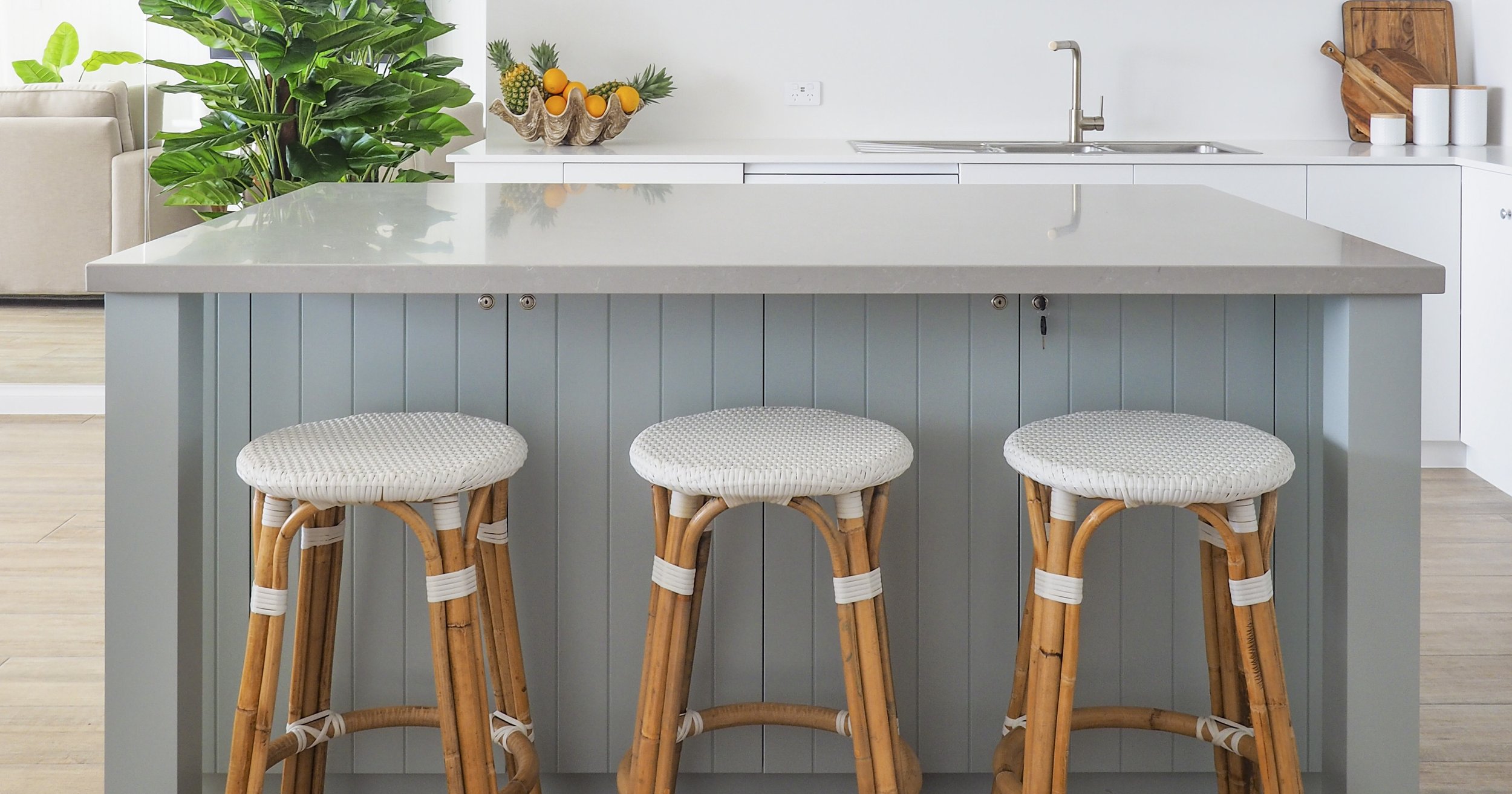
We've become good at creating larger & larger kitchens but, I'm more interested in whether they are functional.
I’m designing a holiday home at the moment and I’ve just removed the butler’s pantry.
Not made it smaller or moved it somewhere else. It’s completely gone.
The butler’s pantry wasn’t doing enough to justify the space it was taking up. Removing it meant I could design a kitchen that still has everything it needs, while giving much-needed space back to the ensuite on the other side of the wall.
The house layout works better without it.
It did make me think about how quickly certain things become part of the accepted formula for a beautiful kitchen. The big island, the butler’s pantry, the appliance cupboard, two dishwashers, two sinks. None of these are bad ideas if that’s what the home needs, but somewhere along the way they seem to have become shorthand for luxury.
I’m not sure when having more became our idea of luxury.
When I’m designing a kitchen, I’m thinking about the people who will actually use the space. Who cooks? Who makes coffee? What activities take place? Does everyone congregate in the kitchen when friends come over? Are we feeding two people most nights or six?
Then there are all the ordinary things nobody puts on a mood board. Where do the grocery bags get placed when you walk through the door? What do you use every morning? What do you want hidden away? Where are we putting the toaster and the chopping boards?
These are small details, but they’re the difference between a kitchen that simply looks good and one that feels easy to live in.
I’ve seen enormous islands that look incredible but aren’t practical. I’ve seen vast amounts of storage that aren’t useful because they’re nowhere near where you need them. I’ve also seen smaller kitchens that work beautifully because someone has thought very carefully about every millimetre.
That’s the part of design I find interesting.
It’s not about making everything smaller, and it’s certainly not an argument against beautiful things. I’ll happily specify the gorgeous stone, the beautiful tapware and the generous island when they’re right for the space.
I just don’t think we need to tick every box every time.
There is something quite liberating about looking at a floor plan and asking, do we actually need this?
Sometimes the answer is “absolutely yes”.
Other times, removing one thing allows something else to become considerably better, which is exactly what happened with this holiday home. We lost the butler’s pantry and gained a better kitchen and a better ensuite.
I’d call that a pretty good trade.
I think we can get so caught up in what a home is supposed to have, that we forget to ask whether any of it will actually make life better. A long list of features might sound impressive, but if they’re taking up space that could be working harder somewhere else, I’m quite happy to question them.
My version of luxury is a home that has been properly thought through, where the space works for the people living in it.
In this house, the luxury wasn’t the butler’s pantry. It was what we could do with the space once we took it out.
At Mel Hoekstra Interiors, we design homes around the way our clients actually live, questioning what earns its place rather than simply following what a home is expected to have. For us, luxury is thoughtful planning, beautiful materials & spaces that work exceptionally well for the people who live there.
That is the foundation of Our Way of Living.
